Valorant Champions Shanghai group stage delivers a playoff blueprint worth copying
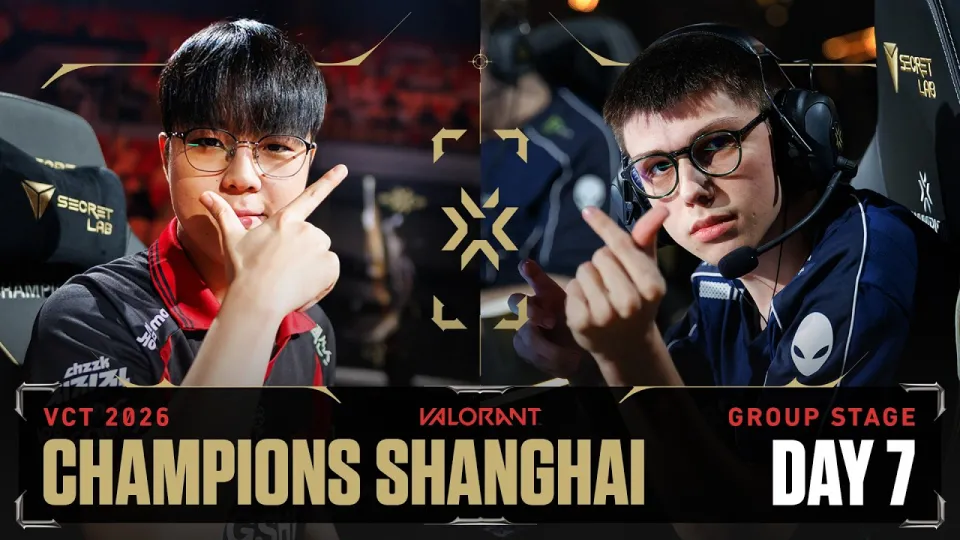
Video: VALORANT Champions Shanghai — Group Stage — Day 7
Want articles like this for your own video to promote it on YouTube and Google? Order them through the Telegram bot @sat_sit_bot. The bot writes and publishes the articles itself (with your YouTube video embedded) on popular topical websites (no ads). Your first 50 articles are free.
· based on the channel VALORANT Champions Tour
Key takeaways
- 16 teams from Americas, CN, EMEA and Pacific compete at Valorant Champions Shanghai for the 2026 world title.
- The event runs September 24 to October 18, with the group stage deciding who reaches the playoff bracket.
- Day 7 of the group stage was streamed by the VALORANT Champions Tour channel and drew heavy viewer discussion about repeated tech pauses.
- Two different Masters champions in 2026 set up Shanghai as the year's biggest test of whether new contenders can close.
- Viewers singled out CN teams losing eco rounds and 5v2 situations, plus utility usage that collapsed once set plays broke down.
Valorant Champions Shanghai is the final stop of the 2026 VCT season, where sixteen teams from Americas, CN, EMEA and Pacific fight for the world title between September 24 and October 18. The group stage, including Day 7 streamed by the VALORANT Champions Tour, decides seeding and survival before the playoff bracket locks in. You can follow brackets, schedules and announcements through the official VALORANT Esports hub on X.
What the Valorant Champions Shanghai group stage actually decides
The group stage is a filter, not a formality: it separates teams that can adapt mid-series from teams that only win when their prepared setups land. Sixteen squads arrive from four regions, and the format rewards depth — map pools, pistol-round planning and clutch discipline matter more than a single hot server.
Key structural facts about the event:
- Sixteen teams qualify from Americas, CN, EMEA and Pacific.
- The tournament window is September 24 to October 18.
- Group play feeds the playoff bracket, so every series changes both seeding and matchup risk.
- Two different Masters events in 2026 produced two different champions, which means no single team entered Shanghai as an untouchable favorite.
The description frames the event around a generational shift: familiar names, new contenders and a fearless crop of challengers. That framing matters for how you read group-stage results — a 2-0 record from an established org and a 2-0 from a first-time international roster are not the same signal.
Day 7 on stream: tech pauses, timestamps and what viewers tracked
Day 7 broadcasts became a test of patience as much as aim. The most-liked viewer reaction was a spoiler-blocking timestamp post, edited to account for a technical pause, and multiple comments asked why the day produced so many pauses. That is a real production detail worth noting: long pauses break momentum, stretch broadcast runtime and push viewers toward timestamp lists instead of watching live.
For anyone reviewing the VOD rather than watching live, the practical approach is:
- Use community timestamp posts to skip pauses and dead air.
- Watch pistol rounds and first-buy rounds first — they reveal each team's default plan.
- Track which team calls the first timeout and whether the following round changes.
- Note eco and semi-eco rounds separately; they decide more group-stage maps than highlight reels suggest.
One lighter moment that circulated among viewers involved a Yoru clone briefly reading as a teammate holding site — a reminder that utility deception still produces confusion even at the top level.
Why CN teams drew the harshest criticism
Regional performance was the loudest argument in the comments, and the criticism of CN representatives was specific rather than generic. Viewers pointed to lost eco rounds, thrown 5v2 advantages and utility usage that fell apart once set strategies were disrupted. One widely liked comment argued that CN teams looked lost whenever their prepared plays did not work, while another insisted other regions had stronger teams that never qualified at all.
Strip out the emotion and three measurable problems remain:
- Eco discipline: losing against save rounds hands over both money and momentum, and it compounds across a series.
- Man-advantage conversion: 5v2 situations should be near-automatic; failing them signals communication breakdown under pressure.
- Improvisation: when set plays fail, teams need default structures — map control, trade patterns, mid-round calls — rather than resetting to a new script.
None of this is unique to one region, but the group stage punishes it publicly. A team that cannot win chaos rounds will not survive a playoff bracket full of opponents who force chaos on purpose.
The Masters champions and the challenger problem
The season's storyline is that two Masters titles in 2026 went to two different winners, which flattened the hierarchy heading into Shanghai. That has two consequences for group-stage reading.
First, preparation advantage is narrower. When multiple teams have proven they can win a international final, no one gets to coast on reputation. Second, group-stage losses carry less stigma but more seeding cost: a slow start can plant a strong team on the same side of the bracket as a stylistic nightmare.
Individual form also shapes the narrative. Veteran names still generate the loudest reactions — one comment thread simply campaigned for a long-time pro to run for president — but the actual edge in Shanghai comes from teams whose initiators and sentinels can improvise after the first contact.
How to watch and read the group stage without wasting hours
A sixteen-team group stage produces dozens of hours of VOD, so filter aggressively:
- Watch the elimination-risk series first. Teams at 0-1 or 1-1 play with different urgency than teams already qualified.
- Prioritize map 1 and map 3. Map 1 shows the prepared plan; map 3 shows whether a team can adapt after being scouted.
- Track pause patterns. Repeated technical stoppages can cool a hot team, and the Day 7 chat made clear viewers notice.
- Score the eco rounds. Count how many save rounds each team converts against and how many they steal; that number predicts playoff resilience better than highlight clips.
- Follow official channels for schedule changes. Start with @valorantesports on X, then the official VALORANT Esports Facebook page and Instagram.
Useful links
- VALORANT Esports on X — schedules, results and announcements
- VALORANT Esports on Facebook
- VALORANT Esports on Instagram
- VALORANT Esports on TikTok
- VALORANT on Twitch — live broadcast channel
Final takeaway
The Valorant Champions Shanghai group stage is doing exactly what a group stage should: exposing which teams can win when their script breaks. The Day 7 broadcast, with its pause-heavy runtime and vocal regional debate, showed a field where eco-round discipline and mid-round improvisation separate contenders from qualifiers. Two Masters champions in one season mean the playoff bracket has no safe side, and CN representatives still have to answer the criticism about lost man advantages and stale utility. This breakdown comes from the VALORANT Champions Tour channel, which streamed the group stage; follow @valorantesports on X for the playoff schedule and results.
Questions & answers
How many teams play at Valorant Champions Shanghai?
Sixteen teams qualify, drawn from Americas, CN, EMEA and Pacific. They compete for the 2026 world championship title, with the event running from September 24 to October 18.
Why were there so many technical pauses on Day 7?
Viewers repeatedly asked about the number of tech pauses during the Day 7 broadcast, and timestamp posts were edited to account for them. The stream does not explain the cause, but the pauses stretched runtime and pushed many fans to watch the VOD with community timestamps instead.
Is the criticism of CN teams at Champions fair?
The specific complaints are concrete: lost eco rounds, failed 5v2 conversions and utility usage that breaks down when set plays fail. Those are fixable habits rather than talent gaps, but they are also exactly the mistakes that decide group-stage series.
Where can I follow the playoff schedule and results?
The official VALORANT Esports channels publish schedules, brackets and announcements, starting with the X account and the Facebook, Instagram and TikTok pages. Live matches stream on the VALORANT Twitch channel.
Source: VALORANT Champions Shanghai — Group Stage — Day 7 · Markdown version